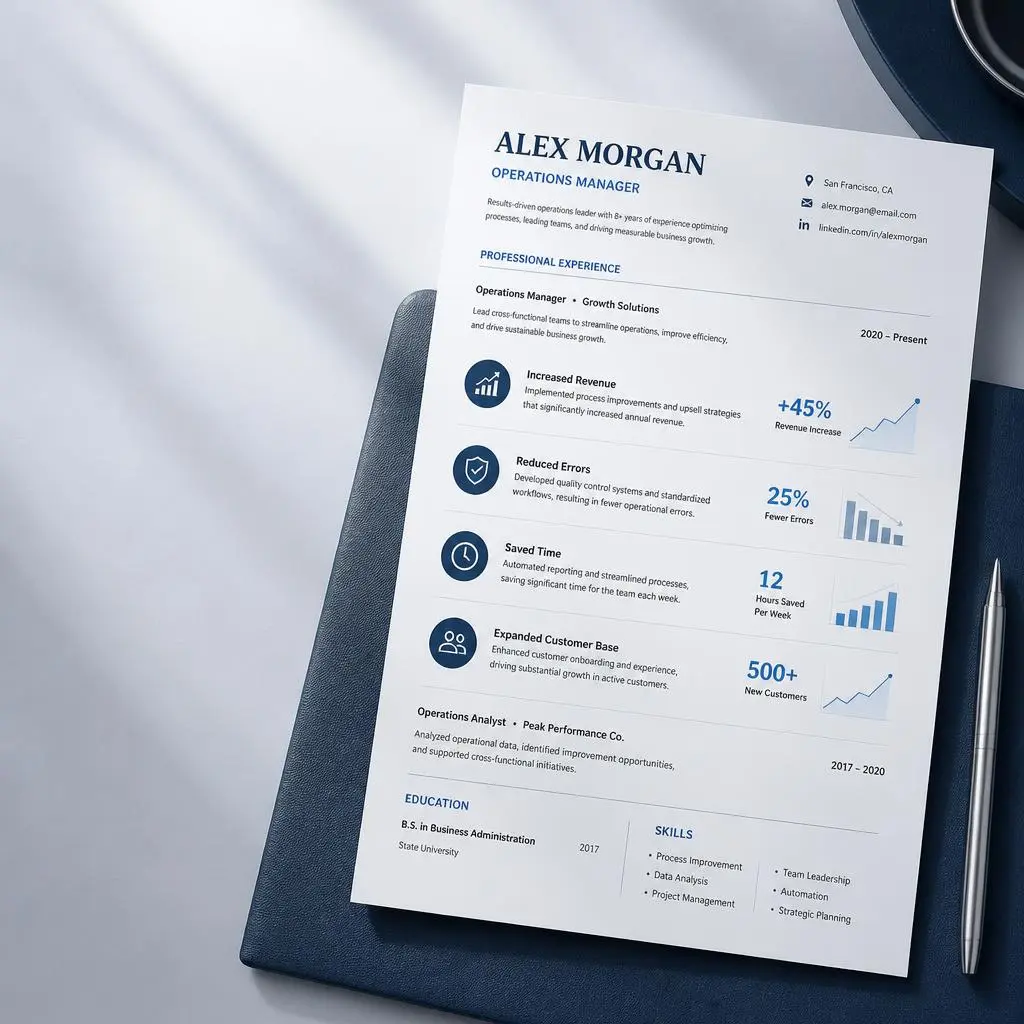
Resume Achievements10 min read
How to Quantify Resume Achievements: A Practical Guide
Learn how to quantify resume achievements with real numbers, choose the right metrics, and turn everyday responsibilities into measurable results.
Boost your knowledge to succeed in your career path
Learn how to quantify resume achievements with real numbers, choose the right metrics, and turn everyday responsibilities into measurable results.

Learn how to explain an employment gap on your resume, when to address it, and how to present career breaks clearly and professionally.

Learn how to highlight transferable skills, close experience gaps, and build an ATS-friendly resume for a career change.

Learn how to write a strong resume with no work experience. Discover what to include, how to highlight projects and skills, and make your resume ATS-friendly.

This article is currently available in Persian. The English version is coming soon.

Learn what a resume summary should include and how to turn your experience and achievements into a concise profile that quickly shows employers your value.

Learn how to turn daily responsibilities into measurable achievements with ATS-friendly resume bullet points, proven formulas, and practical examples.

Compare the three main resume structures and learn which format fits your career path, experience level, employment history, and job search goals. Discover when to use a chronological, functional, or combination resume.

PDF vs. Word (DOCX) for ATS can affect how accurately your resume is parsed. Learn when to use PDF or DOCX, how text extraction and reading order affect ATS compatibility, and how to avoid formatting issues.

Understand how recruiters scan resumes, what information they notice first, and how to design a resume that captures attention quickly.

Avoid the most common resume mistakes that hurt your job applications, reduce ATS compatibility, and prevent recruiters from noticing your experience.

Discover the best ATS-friendly resume format, including layout rules, formatting tips, and mistakes that can prevent your resume from being properly scanned.

Learn how to tailor your resume for each job description by identifying required skills, matching keywords, and highlighting relevant experience.

Learn how resume keywords affect ATS rankings, how to identify important job-specific terms, and how to optimize your resume for recruiters.

Learn how an ATS resume checker works, what it analyzes, and how you can use resume testing tools to improve your chances of getting interviews.

Learn the most common reasons resumes fail ATS screening, from missing keywords to poor formatting, and how to fix them effectively.
Find out what ATS score is considered good, how recruiters interpret match rates, and what score you should aim for before submitting your resume.

Discover practical strategies to improve your ATS score, optimize resume keywords, fix formatting issues, and increase your chances of passing automated screening.

Learn what an ATS score is, how Applicant Tracking Systems evaluate resumes, how scores are calculated, and how to improve your resume match rate before applying for jobs.

Excerpt: Learn how to analyze job descriptions, extract key requirements and keywords, and identify the skills you should highlight on your resume.

Learn how to write a compelling cover letter that captures hiring managers’ attention and connects your experience to the job.

Learn how ATS systems parse resumes, identify keywords, and rank candidates—and how to optimize your resume for better compatibility and visibility.